AI in the Creative Industry: Balancing Innovation, Copyright, and Ownership
Copyright and ownership of intellectual property have long been problematic issues. They are becoming more complex, as artificial intelligence can now generate artwork across several platforms, from visual art to music. In particular, generative AI (GenAI) is a type of AI that can generate new content by training on large datasets (Singh et al. 2025). However, the training data is sourced from many different places, raising ethical concerns about whether AI is being used to exploit creators’ assets without authorisation. While it is important to incentivise technological innovation, people should be concerned about copyright and ownership of intellectual property.
Here I want to work through the ethical issues in supporting AI development while safeguarding creators’ copyright and ownership.
Background and Context
Artificial intelligence is a field of computer science focused on building systems capable of performing tasks that would typically require human intelligence, trained by learning from millions of examples until they can imitate similar solutions (Zhai et al. 2021). Critically, this training process requires the physical ingestion and storage of source material at a massive scale, unlike human learning, which absorbs influence passively. AI training involves systematically copying billions of data points.
AI has been applied across healthcare, transportation, economics, and education (Bickley et al. 2022, Haleem et al. 2019, Abduljabbar et al. 2019). Its application in the creative field, however, has raised significant concern among the public and specialists alike. GenAI systems such as Google’s Gemini and OpenAI’s DALL·E are trained on massive datasets of artworks or music sourced from museum digitisation projects and publicly available internet data (US Copyright Office 2025). That data was originally collected for preservation and public access, not commercial AI training, meaning original creators never consented to their work being used this way. Unlike a human artist who views and learns from other work, GenAI literally copies and encodes that work into its parameters, making the training process itself a potential act of infringement.
Content generated from a short prompt raises a second question: ownership. Does the output belong to the prompter, the developer, or the original creators whose work trained the model? The relatively free use of copyrighted data has accelerated AI development, but it raises fundamental questions about copyright and ownership, the two concerns I want to address in turn.
Ethical Concerns
Copyright
According to the Australian Attorney-General’s Department, copyright is an intangible intellectual property right founded on a person’s creative skill and labour, created by law. While research use is permitted under the Australian Copyright Act, no specific rules govern the use of copyrighted data in commercial GenAI training (Australian Attorney-General’s Department n.d.). This gap has sparked widespread controversy.
Sydney-based artist Leutwyler discovered her work had been included in LAION-5B, a dataset of over 5 billion web-scraped images, without her consent (Kelly 2022, Schuhmann et al. 2022). Similarly, artist Andersen and others sued Stability AI for training on their work without permission. The case was initially dismissed but reinstated on appeal, illustrating the systemic difficulty artists face in court (Andersen v. Stability AI 2023). Judge Orrick acknowledged that outcomes depend heavily on the unique facts of each case, confirming that consistent legal protection cannot rely solely on litigation.
Artists consistently accuse AI companies of using their artwork without any compensation or credit. AI companies defend these practices as fair use, a legal doctrine originally designed for human commentary and criticism, not for automated, large-scale commercial training. These cases collectively demonstrate that existing copyright law was not designed for this context, leaving creators systematically unprotected.
Ownership
Ownership is the legal relation between a person (individual, group, or government) and an object. Any artwork belongs to the artist or their employer, but in commercial contexts, ownership may transfer to another party. Content generated by AI from a prompt written by a person: should it belong to that person, the technologist who designed the model, the company that owns the model, or even the model itself? That is still a big question without a particular answer.
European Union copyright requires human originality and intellectual creation as a condition for copyright protection (European Parliament 2019). Conversely, the Beijing Internet Court in Li v. Liu (2023) held that an AI-assisted image could be copyrighted because the human plaintiff’s active choices, prompts, and refinements met the originality requirement (Beijing Internet Court 2023). This suggests that active human involvement in prompting can satisfy originality requirements, yet what constitutes sufficient human creative input remains ambiguous across jurisdictions.
To some extent, prompting can be considered a form of human creative input, as it involves intentional artistic direction. However, recognising AI-generated content as the prompter’s property raises a deeper ethical contradiction. If the model was trained on uncredited copyrighted works, the prompter’s ownership claim rests on the original creators’ uncompensated labour.
Stakeholders and Perspectives
Technologists and Business Owners
Technologists and business owners share a common interest in the freedom to use data to train AI, as it accelerates development and eliminates the cost and complexity of licensing agreements. Technologists are particularly optimistic about greater job opportunities and broader AI applications (Bratanova et al. 2025), while businesses benefit from AI’s ability to generate content significantly faster and more cost-effectively than human creators.
This optimism is not unanimous. Senior Stability AI executive Ed Newton-Rex resigned over the company’s position that using copyrighted work without permission is acceptable, revealing that even within the industry there is no ethical consensus (Knibbs 2024). The legal landscape is also shifting. In September 2025, Anthropic agreed to a $1.5 billion settlement over the use of pirated books to train its AI, the largest copyright settlement in AI history (Milmo 2025), signalling that courts are increasingly rejecting fair use as a blanket defence for commercial AI training.
Ultimately the current model is self-defeating: if AI-generated content displaces human creativity, the diversity and quality of training data will inevitably decline, limiting AI’s own creative capacity.
Artists and Creators
Besides the risk of being replaced by AI, artists also face unauthorised use of their assets. Artists’ unique styles, which represent years of creative development, are now replicable by AI at scale, raising fundamental questions about the value and ownership of artistic identity.
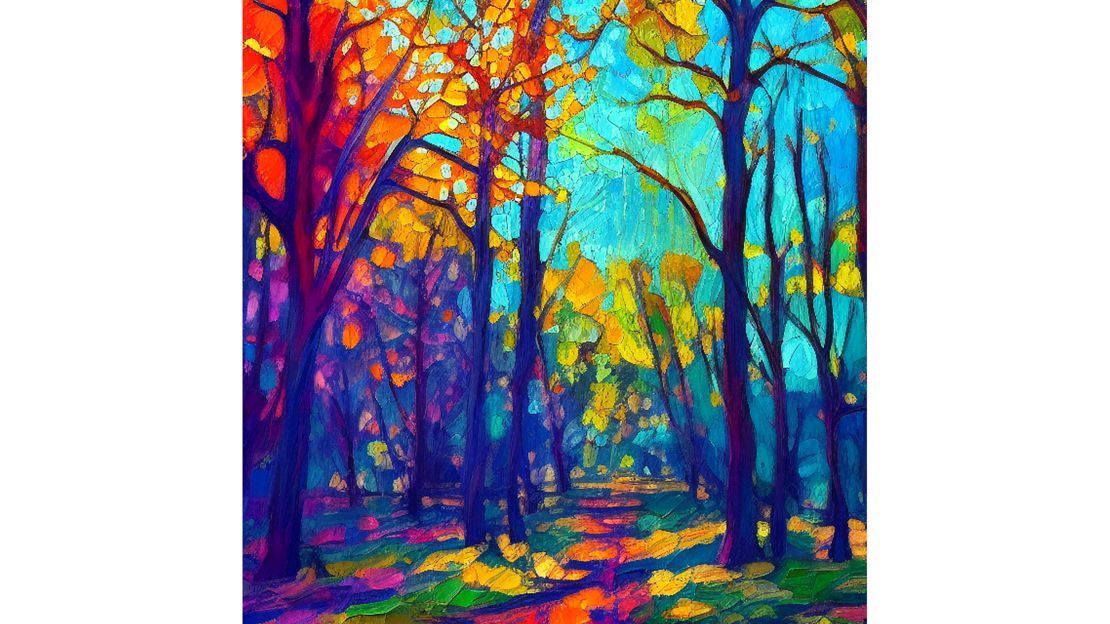
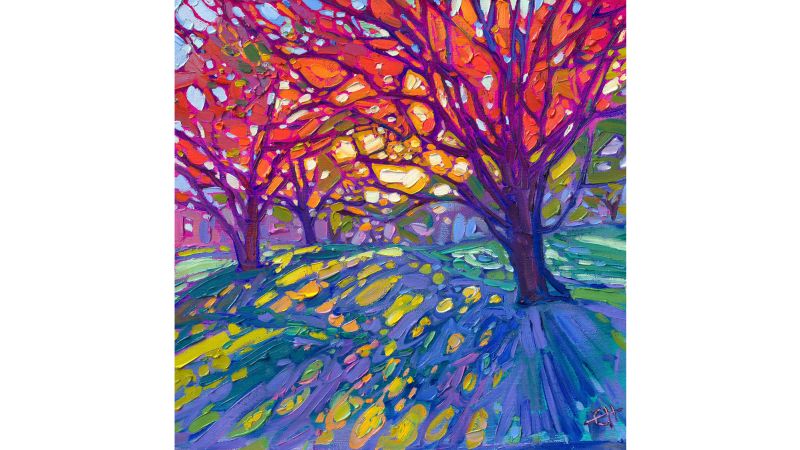
A striking illustration: CNN’s Rachel Metz generated an image on Stable Diffusion using input from artist Erin Hanson, and placed it beside Hanson’s own 2021 oil painting Crystalline Maples. Hanson, based in McMinnville, Oregon, is one of many professional artists whose work was included in the dataset used to train Stable Diffusion (Gault 2022). The resemblance is the point: the model had absorbed her style well enough to reproduce it on request.
Artists have responded to this challenge in three distinct ways. Many have adapted and use it as a tool to accelerate the process of making art; some visual effects in the film industry can now be executed by AI. Others are returning to traditional methods such as sculpting, charcoal, oil painting, and live music, seeking tangibility and human connection through authentic craft. A third group is actively resisting through legal and political channels, as seen in the Andersen v. Stability AI case, pushing for stronger protections and compensation frameworks.
Public Views
A 2023 study found that participants were less positive about using AI in the arts and culture field in general than in fields such as medicine, construction, and real estate technology (Latikka et al. 2023). However, the results reveal that high-tech users have a positive attitude toward the use of GenAI, suggesting that familiarity with AI reduces ethical concerns. That raises its own question: is public acceptance driven by genuine ethical reasoning, or by exposure and convenience?
Another study analysing reactions across the US, Japan and China found that China tends to be more optimistic toward integrating AI in the arts, while the US and Japan are more conscious of and focused on ethical concerns (Bao 2025). Public reaction to AI in the creative industry appears to vary with cultural values, technological familiarity, and the relative weight placed on innovation versus creator rights. This divided opinion creates pressure on policymakers from both directions: enable AI innovation while simultaneously protecting creative rights.
Policymakers
Policymakers face the central challenge of balancing technological innovation with creators’ rights. As established, existing legal frameworks were not designed for this context, and case-by-case court rulings provide inconsistent protection. Judge Orrick himself acknowledged that outcomes depend heavily on the unique facts of each case (Andersen v. Stability AI 2023).
Given the complexity of competing interests, any effective AI policy requires a comprehensive analysis across legal, economic, and social dimensions. Legislation released without this consideration risks either stifling innovation or leaving creators systematically unprotected. This jurisdictional fragmentation underscores the urgent need for an internationally coordinated regulatory framework.
Current Solutions
Several solutions have been proposed to address this issue.
Registries like haveibeentrained.com allow artists to check whether their work appears in training datasets and request removal. However, these registries are opt-in and retrospective. They offer no remedy for artists whose work is already encoded in deployed models, and provide no compensation.
Litigation has proven effective in isolated cases: Andersen v. Stability AI was reinstated on appeal, and Anthropic’s $1.5 billion settlement demonstrates that courts can force compensation (Milmo 2025). But legal action remains inaccessible to most individual artists, who lack the financial resources to sustain such cases.
The EU AI Act (2024) represents the most comprehensive regulatory attempt to date, requiring AI companies to disclose training data sources (European Parliament 2024). Yet it addresses transparency rather than consent or compensation, and its scope is limited to EU-based operations, leaving companies training models outside Europe largely unaffected.
Taken together, existing solutions are fragmented, jurisdiction-dependent, and reactive rather than preventive. What is required is an internationally coordinated framework, similar to the Paris Agreement (UNFCCC 2015), that establishes binding minimum standards for consent, transparency, and compensation across jurisdictions, ensuring creators are protected regardless of where AI companies operate.
Discussion and Conclusion
The rapid development of AI has outpaced legislation in many countries, and this regulatory gap has inadvertently created freedom for AI to be widely applied across industries. Restricting the use of copyrighted art in training data could reduce dataset diversity, affecting model performance, or increase training costs, hindering development. The question is therefore not whether to regulate, but how to regulate in a way that preserves innovation while ensuring creators are fairly compensated.
Historical precedent suggests this tension may resolve itself over time. The invention of photography in the 19th century displaced portrait commissions yet ultimately became its own art form, and digital tools such as Adobe’s in the 20th century similarly expanded rather than replaced creative practice. Rather than destroying existing art forms, disruptive creative technologies have historically branched into distinct genres. GenAI may follow the same trajectory, currently favoured for its novelty, but eventually settling into a particular creative genre that complements rather than threatens human artistry.
In conclusion, the rapid development of GenAI has exposed fundamental flaws in copyright and ownership frameworks that were never designed for large-scale training on copyrighted assets. Artists face both unauthorised use of their work and uncertainty about the ownership of AI-generated outputs, while existing solutions remain fragmented and jurisdiction-dependent. Without coordinated international regulation establishing minimum standards for consent, transparency, and compensation, creators will remain systematically unprotected.
And as I have argued throughout, suppressing human creativity through unchecked AI use ultimately undermines AI’s own creative capacity, making fair regulation not just an ethical imperative but a practical necessity for sustainable AI development. Historical precedent suggests GenAI may eventually become a distinct creative genre rather than a replacement for human creativity, but this transition has to be managed in a way that protects those whose creativity makes AI possible.
References
- Abduljabbar, R., Dia, H., Liyanage, S. & Bagloee, S.A. 2019, ‘Applications of Artificial Intelligence in Transport: An Overview’, Sustainability, vol. 11, no. 1, p. 189. doi
- Andersen v. Stability AI Ltd, No. 23-cv-00201 (N.D. Cal. 2023), United States District Court for the Northern District of California. docket
- Australian Attorney-General’s Department n.d., Copyright, Australian Government, viewed 22 March 2026. link
- Bao, S. 2025, ‘Cross-cultural attitudes toward generative AI in Art: Implications for sustainable creativity in the U.S., Japan, and China’, Sustainable Futures, vol. 10, article 100929. doi
- BBC Future 2024, ‘AI art: the end of creativity or a new movement?’, BBC Future, 18 October. link
- Beijing Internet Court 2023, Li v. Liu, Case No. (2023) Jing 0491 Min Chu 11279. summary
- Bickley, S.J., Chan, H.F. & Torgler, B. 2022, ‘Artificial intelligence in the field of economics’, Scientometrics, vol. 127, pp. 2055-2084. doi
- Bratanova, A., Hajkowicz, S.A., Evans, D., Chen, H., Bentley, S., Pham, H. & Hartman, S. 2025, Australia’s Artificial Intelligence Ecosystem: The 2025 Update, National Artificial Intelligence Centre, CSIRO, Canberra. link
- European Parliament 2019, Directive (EU) 2019/790 on Copyright and Related Rights in the Digital Single Market. link
- European Parliament 2024, Regulation (EU) 2024/1689 (Artificial Intelligence Act). link
- Gault, M. 2022, ‘This Artist Is Furious That Her Work Is Being Used to Train AI’, VICE Motherboard, 13 September. link
- Haleem, A., Javaid, M. & Khan, I.H. 2019, ‘Current status and applications of Artificial Intelligence (AI) in medical field: An overview’, Current Medicine Research and Practice, vol. 9, pp. 231-237. doi
- Kelly, C. 2022, ‘Australian artists accuse popular AI imaging app of stealing content, call for stricter copyright laws’, The Guardian, 12 December. link
- Knibbs, K. 2024, ‘This Tech Exec Quit His Job to Fight Generative AI’s Original Sin’, WIRED, 17 January. link
- Latikka, R., Bergdahl, J., Savela, N. & Oksanen, A. 2023, ‘AI as an Artist? A Two-Wave Survey Study on Attitudes Toward Using Artificial Intelligence in Art’, Poetics, vol. 101, article 101830. doi
- Milmo, D. 2025, ‘AI startup Anthropic agrees to pay $1.5bn to settle book piracy lawsuit’, The Guardian, 5 September. link
- Schuhmann, C. et al. 2022, ‘LAION-5B: An open large-scale dataset for training next generation image-text models’, Advances in Neural Information Processing Systems, vol. 35. arXiv
- Singh, V., Li, K.-C., Asari, V.K. & González Crespo, R. 2025, ‘Comprehensive Review of Generative Artificial Intelligence: Mechanisms, Models, and Applications’, Procedia Computer Science, vol. 257. doi
- United Nations Framework Convention on Climate Change 2015, The Paris Agreement, viewed 23 March 2026. link
- US Copyright Office 2023, Copyright and Artificial Intelligence, Part 1: Digital Replicas, Washington DC. link
- US Copyright Office 2025, Copyright and Artificial Intelligence, Part 3: Generative AI Training, Washington DC. link
- Zhai, X. et al. 2021, ‘A review of artificial intelligence (AI) in education from 2010 to 2020’, Complexity, vol. 2021, article 8812542. doi